SDVOSB · VETERAN-LED
Home/News & Media/Are Sirens Making a Comeback?
// Latest Stories · Life Safety Insight

Are sirens making a comeback?

For a decade the outdoor warning siren was written off as a relic — a Cold War echo drowned out by push alerts and smartphones. Then the cell towers went down. Here's why the humble siren is quietly becoming the most future-proof layer in modern mass notification.
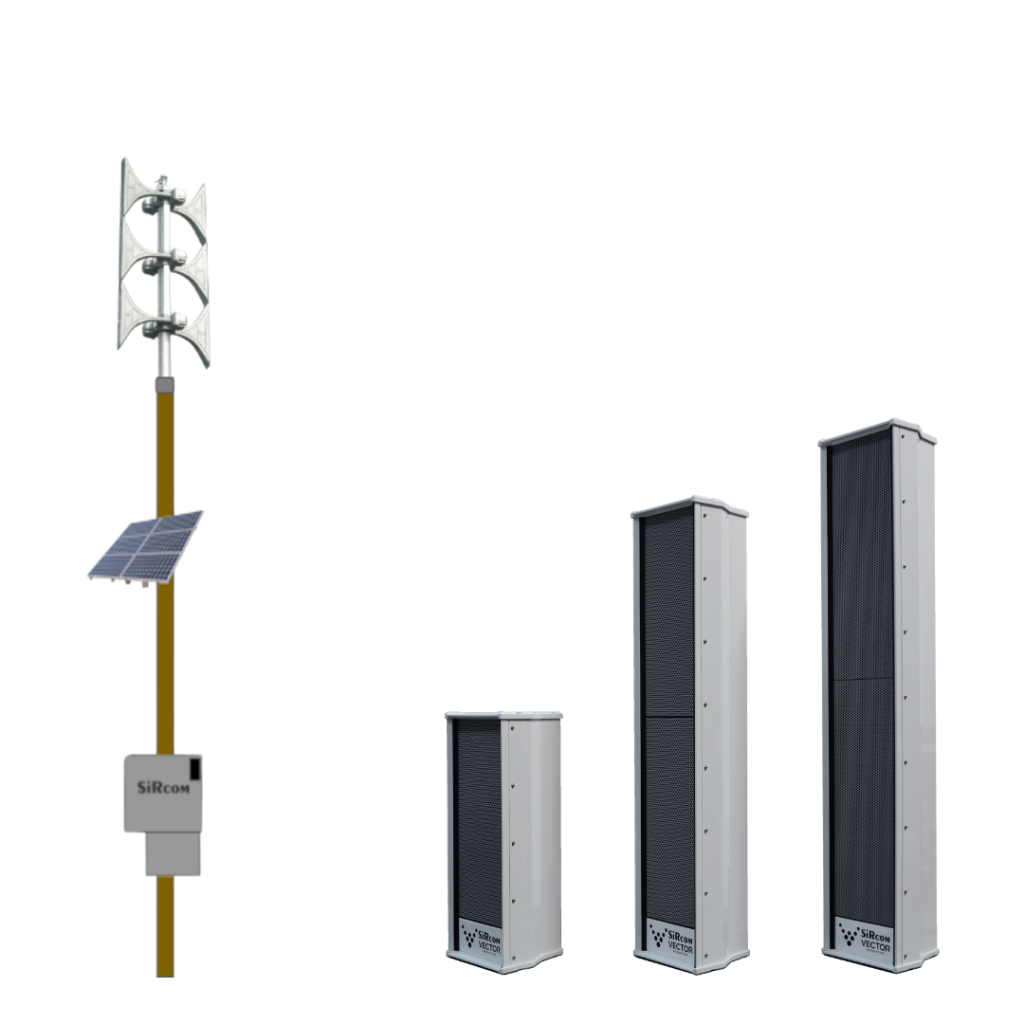
// The Turning Point

We put all our trust in the phone in our pocket. Then the phone stopped ringing.

Wireless Emergency Alerts, opt-in text systems, and social media were supposed to make sirens obsolete. But the last few years of wildfires, floods, tornado outbreaks and grid failures taught emergency managers a hard lesson: every digital channel shares a single point of failure. When power drops or towers saturate, the alert never arrives — and it's the middle of the night, and phones are on silent.

"A phone alert asks the public to be reachable. A siren simply reaches them. In a genuine emergency, the difference between those two verbs is measured in lives."

— HQE Systems field brief, community resilience program
// The Case Against Assumptions

Every reason sirens fell out of favor — and why the modern answer is different.

The sirens being decommissioned in the 2000s deserved to be. They were single-tone, blind, and unmaintained. The systems replacing them today share nothing but the name.

The old objection

"Sirens only make noise. Nobody knows what the sound means or what to do next."

The intelligent answer

Intelligent Voice Sirens broadcast clear, multilingual spoken instructions — evacuate, shelter, all-clear — not just a wail. The public hears exactly what's happening and where to go.

The old objection

"They're relics. Untested, unmonitored, silent until the one day they're needed."

The intelligent answer

Modern arrays run continuous self-diagnostics, report battery and radio health to a live dashboard, and silent-test themselves nightly. You know a siren works before you ever need it.

The old objection

"Everyone has a smartphone now. Why broadcast to the sky?"

The intelligent answer

Because phones fail exactly when they're needed most. Sirens are the one layer that works with no signal, no app, no charge, and no language barrier — outdoors, day one.

// What Changed

The comeback isn't nostalgia — it's engineering.

Four advances turned a Cold War fixture into a networked life-safety asset that emergency managers are actively re-adopting.

Voice, not just tone

Live and pre-recorded speech delivers actionable instruction in multiple languages — so a warning informs rather than just alarms.

Off-grid resilience

Solar-backed batteries and redundant radio paths keep sirens broadcasting through the exact power and network outages that silence every phone-based system.

One command, every channel

Through Unified Mass Notification, a single activation fires the sirens, WEA, SMS, digital signage and desktop alerts simultaneously — sirens as a layer, not an island.

Always accountable

Every activation, test and fault is logged and time-stamped. When the after-action report is written, you can prove the system worked — and when.

// The Layered Reality

Sirens aren't back to replace your phone. They're back to catch what it misses.

The strongest programs don't pick a channel — they stack them, so a failure in one is covered by three others. Here's how a single alert cascades in seconds.

1
Operator activates onceA single, authenticated action from SiSA Alert Software.
2
Sirens broadcast the outdoorsVoice + tone reaches everyone within range — no device required.
3
Digital channels reach the indoorsWEA, SMS, signage and desktop alerts fire in parallel.
4
Dashboard confirms deliveryLive status verifies every layer performed as intended.
// The Verdict

So — are sirens making a comeback?

Yes. But the honest answer is they never should have left. What's really happening is a correction: emergency managers are rediscovering that redundancy saves lives, and that the most reliable warning layer is the one that needs nothing from the public to work. The siren isn't nostalgia. It's the anchor of a modern, layered alerting strategy — and it's quietly becoming standard again, one community at a time.

// Talk to Life Safety

Rethinking your outdoor warning strategy?

Our team designs, deploys and maintains Intelligent Voice Siren networks integrated with Unified Mass Notification — from a single campus to a county-wide grid.